
How Bench Warrants Work in Comanche County
A bench warrant is a court order responding to a failure to meet a case obligation, commonly a missed appearance. Depending on the case, noncompliance with a court order or a fine may lead to additional process. It is connected to an existing case rather than being the initial order to arrest someone suspected of a new offense.
Comanche County does not publish a unified bench-warrant index. The issuing court’s docket and file control the status. The Sheriff may serve an order, but cannot decide whether a judge recalls it. Ask the court clerk to identify the case and explain the current entry.
Missed Dates in Comanche County Courts
The court named on a citation matters. Comanche Municipal Court directs a person to appear or enter a plea within ten calendar days. Its published instructions say a failure to appear may result in a warrant and a driver-license renewal hold. The court also states that calling does not count as an appearance. Those are municipal procedures; do not assume every JP or district case follows the same timetable.
For a district criminal matter, contact the District Clerk to locate the file and learn which court staff handle the setting. For a county or precinct case, confirm the Justice of the Peace named on the paperwork. No countywide grace period or warrant recall docket was found in the reviewed materials.
Comanche Municipal Court’s instructions explain its local appearance route.
If a notice was mailed, compare its date and case identifier with the docket. County materials do not establish that every court sends the same warning or grants a universal grace window. Call the named clerk promptly rather than assuming that an earlier letter changed the setting.
Bench Warrant Issuance in Comanche County
After a missed setting or other violation, the judge determines what process applies. The court may issue an order for arrest, set conditions, or use another remedy authorized for that proceeding. Local sources do not describe one automatic countywide path, notice period, or publication step. The specific docket entry and order are the reliable way to learn what happened in an individual case.
A court order does not become resolved merely because time passed or a person paid an amount online. The clerk can say whether a hearing, compliance proof, bond, or judicial action is still required. Do not presume the warrant has been entered into every database or that every public case search shows it.
The public court directory can help locate the correct contact when a document is incomplete. Search by county and court type, then confirm the listing with the office before sending a filing. It is a directory, not a warrant database.
Use the Texas courts directory search to locate an official court listing.
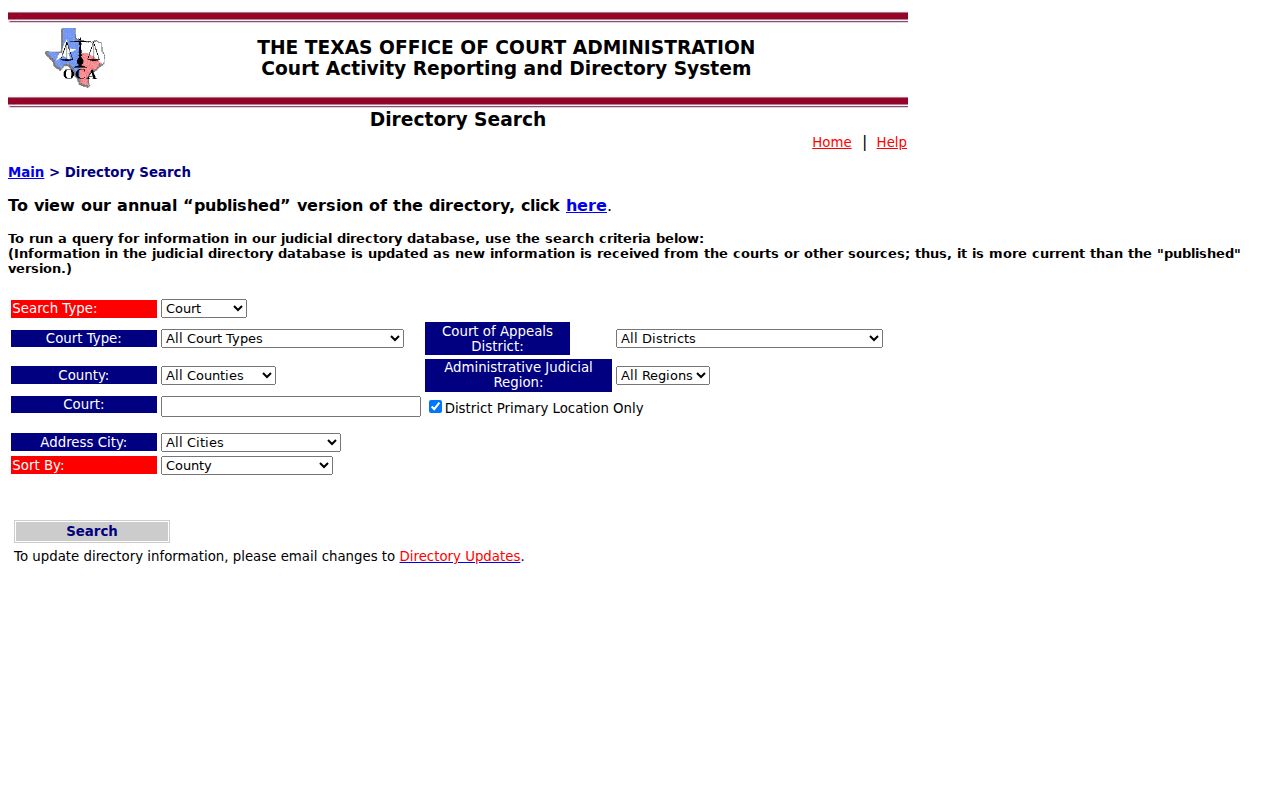
The directory supports routing; the issuing court must verify an individual case.
Comanche County Has No Shared Recall Calendar
No public Comanche County bench-warrant calendar, roundup schedule, or walk-in recall docket was found in the local sources. Municipal, JP, and district courts set their own proceedings. A court directory can identify the clerk to contact, but it cannot tell a person whether a judge will hear a recall request that day.
Call the issuing clerk before traveling and ask whether a motion must be filed first, whether counsel should appear, and what documents to bring. A courthouse visit without a scheduled court route may not reach the judge who controls the order.
Capias Pro Fine and Payment Defaults
Texas Code of Criminal Procedure Chapter 45A distinguishes ordinary failure-to-appear process from enforcement of a fine after judgment. A capias pro fine may follow statutory steps for an unpaid fine or cost; it is not simply another name for every bench warrant. The court must apply the procedure appropriate to the case and the person’s ability-to-pay protections.
For a Comanche city citation, ask the municipal clerk what balance, hearing, or compliance option remains. For a Justice Court citation, route the question to that precinct court. Do not send payment to the County Clerk or Sheriff based on a generic internet result. Read the official Chapter 45A provisions alongside the specific court’s instructions.
Chapter 45A includes an initial failure-to-appear warrant provision, bond rules, and later capias-pro-fine procedures. These statutes describe legal process; they do not show whether a particular Comanche court issued or recalled an order. Ask the clerk which court event appears in the file before deciding which procedure applies.
The official Texas text distinguishes these municipal and justice-court processes.
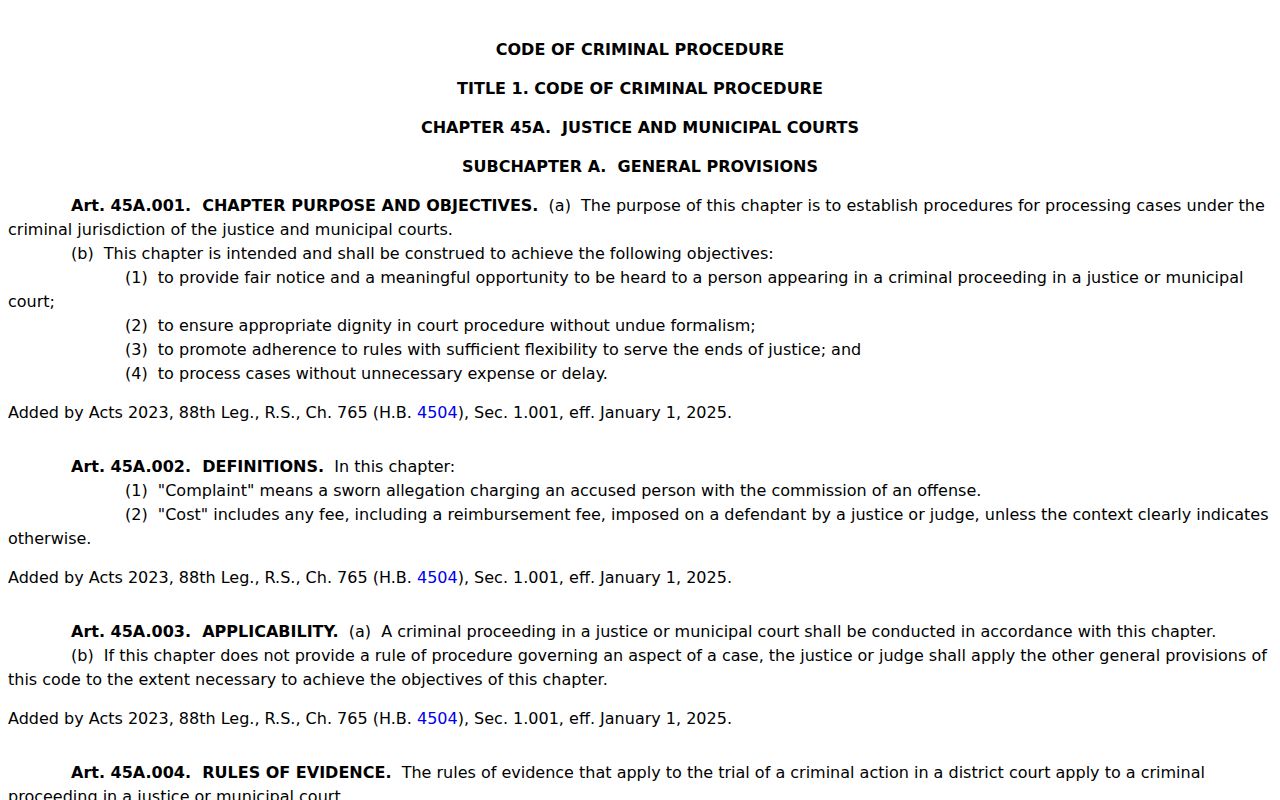
Use the statute for the framework, then verify local case requirements with the court.
How Bench and Arrest Warrants Differ
A bench warrant follows a court matter already underway, often after a missed appearance or unmet order. An arrest warrant generally begins with a judicial finding of probable cause about an alleged offense. Both can authorize custody, but the reason, underlying file, and way to address the order differ. See the county’s arrest-warrant explanation for service and record details.
| Feature | Bench Warrant | Arrest Warrant |
|---|---|---|
| Trigger | Missed setting or unmet court obligation | Probable cause concerning an alleged offense |
| Who Issues It | Judge handling the existing case | Judge or magistrate after required review |
| Underlying Case | Pending court file or judgment | Investigation or criminal charge |
| How It Clears | Action approved by issuing court | Address the charge and any custody process |
Driver License Holds After a Comanche City FTA
Comanche Municipal Court warns that failure to appear can affect renewal or issuance of a driver license. That administrative consequence is separate from the court’s warrant status. Texas DPS’s failure-to-appear and failure-to-pay program and OmniBase provide a compliance pathway for covered cases; they do not expose the underlying warrant file or replace the issuing court’s decision.
Ask the court what must be completed and when it reports compliance. Then verify any separate DPS hold through official driver-license channels. A payment confirmation is useful evidence, but it does not by itself prove that a judge recalled a warrant or that every system has updated.
DPS explains the FTA/FTP program; OmniBase customer service is listed at 800-686-0570.
Clearing a Bench Warrant in Comanche County
First identify the issuing court and ask whether the warrant remains open, what event triggered it, and whether the court requires an appearance before payment or other compliance. A lawyer can contact the court and assess a motion to recall or quash, bond conditions, or a voluntary appearance plan. There is no published countywide walk-in procedure to rely on.
- Locate the citation, cause number, court, and most recent notice.
- Call that clerk to confirm status and ask for the court’s current instructions.
- Discuss an appearance, bond, payment, or recall motion with counsel as appropriate.
- Complete the court-ordered step and obtain confirmation that the docket was updated.
Caution: Do not assume a bench warrant expired or disappeared; an unresolved order can lead to arrest, and only the issuing court can confirm its status.
What to Ask the Issuing Clerk
Give the clerk the identifying details already on your paperwork and ask which court controls the order. Confirm whether the case is criminal, traffic, fine-only, or another matter; whether a hearing is required; and what proof or payment the court accepts. Ask if a new setting can be scheduled, if counsel must file a motion, and how the court confirms release or recall.
Comanche Municipal Court requires the stated plea or appearance. Confirm any authorized setting and required filing with its clerk.
For a district felony case, the District Clerk at 215 N Houston can locate the file and identify court staff. The public counter is open on weekdays with a lunch closure; confirm the current schedule before visiting. A clerk can find the record, while counsel can advise whether a motion or appearance is appropriate.
For a municipal case, ask what proof the court needs if a fine was paid or a missed setting was rescheduled. For a county ticket, use the JP named on the citation. A recall request and a request to set a new date may require different action, so ask the clerk to explain the next filing.
Comanche County Courts That Issue Bench Warrants
Municipal courts handle city ordinance and Class C cases within their jurisdiction. Comanche Municipal Court maintains its own citation portal and clerk contact. De Leon has a separate municipal portal and clerk schedule. Gustine’s city information does not publish a current online court search, so a ticket naming that court should be routed through City Hall for the current contact.
Justice Court matters belong with the JP precinct shown on the citation; the county FAQ routes DPS, Sheriff, deputy, and game-warden tickets to Justice of the Peace Johnny Conine. District felony records go through the District Clerk. The Sheriff serves process but cannot change the issuing court’s docket. Start with the county warrant-check routes if the court is unclear.