
How Arrest Warrants Work in Comanche County
An arrest warrant tells officers to take a named person into custody. The judge or magistrate must find probable cause first. Comanche County follows Texas Code of Criminal Procedure Chapter 15, which sets rules for the complaint, the warrant, and its execution. Local agency pages offer no live status check. The issuing court controls the case entry.
How a Comanche County Warrant Reaches Court
Every Comanche County criminal case starts with sworn facts. An officer or a prosecutor brings them to a magistrate. The magistrate reads the complaint and decides whether legal grounds exist. From there, the paper trail can branch. A missed court date may produce a bench warrant. A summons, an indictment-related capias, or another court event can spawn its own document. So the record holder and the procedural stage tell you what an entry actually means. Comanche County's own paperwork reflects that split. The county's March 2026 commissioners' minutes mention CloudGavel, a system for internal warrant approval workflow. That reference is administrative only. It does not offer a public warrant lookup. Anyone verifying a case should go through the named clerk or court rather than expect that internal workflow to show a result. Keep an arrest warrant apart from the capias that may follow a later charging or court event, too. A name in a county criminal index is not automatically an arrest-warrant entry, and a public docket may not expose the supporting affidavit. Ask the clerk which record is available and whether another order controls the next step. For the general arrest-warrant provisions, see the official Texas Code of Criminal Procedure Chapter 15.
Arrest Warrants: What They Contain
Want to know which court issued a Comanche County arrest warrant? Pull the docket entry or a copy of the order. It should point to the issuing authority and the case. There is no uniform public warrant-number format, so ask the clerk which citation or cause number belongs to the matter. Even a full public case summary may leave out the warrant itself and the affidavit behind it.
| Reference | cause number helps the clerk locate the underlying case. |
|---|---|
| Named person | Confirm identity with more than a name; similar names can refer to different people. |
| Offense | The stated charge or alleged conduct; it is not a finding of guilt. |
| Issuing court | Identifies the authority that can confirm current status and conditions. |
| Bond terms | Ask the court or jail about current conditions; an online field may be incomplete. |
| Issue date | Useful context, but an old date alone does not establish whether the order remains active. |
Which Comanche County Record Holder Has the File
For felony files in Comanche County, the District Clerk is the record holder. Its public-access page links to Tyler's case system and posts counter hours of Monday through Friday, 8:30 a.m. to 5 p.m., with a lunch closure. Run a case search there to find the file, but remember what it is not: an official certification that no arrest warrant is open. Use the District Clerk's official page to reach that route. The County Clerk handles a different slice. Its FAQ describes a criminal name search at $5 per name, with $1-per-page copies and a $5 certification charge per case. Those fees locate recorded material, not a live warrant-status check. The clerk, the court, and the law-enforcement agency can each hold a different piece of the record, so one office rarely tells the whole story.
How Warrants Get Served in Comanche County
The Comanche County Sheriff's Office sits at 300 Industrial Boulevard in Comanche, and its public page lists the main agency number, 325-356-7533. No separate public warrant-unit line appears there, and no service schedules are posted. City officers and other authorized peace officers can execute an order too. Don't assume only one agency can. Service can happen during an investigation or any other lawful contact. After an arrest, the person goes through booking and magistration, and bond or other conditions are set by the proper authority. For custody and booking questions, the County Jail line is 325-356-2333. That line does not replace a court's status confirmation, and it is not legal advice.
When the Arrest-Warrant Affidavit Is Not Public
Texas Chapter 15 governs arrest warrants; Chapter 18 covers search warrants and their affidavits. The two are not interchangeable. Under Chapter 18 procedures, search-warrant materials may stay sealed for a period, and arrest-warrant records can also be withheld when a law-enforcement exception applies. Filing an information request does not force a Comanche County agency to hand over exempt material. The Public Information Act generally reaches existing records held by a covered office, but Government Code Section 552.108 can protect material tied to active law-enforcement work. If a record is only partly withheld, ask for the segregable, non-exempt portions. Family Code protections also keep juvenile arrest-warrant records confidential in relevant circumstances. Read the official Chapter 18 search-warrant rules and the Texas Public Information Act for the full text. One more distinction matters here. Article 18.01 sets a post-execution rule for search-warrant affidavits, and that rule is separate from Chapter 15 arrest-warrant requirements. A specific affidavit may still be sealed or withheld under applicable law. Ask the record holder which provision applies rather than assuming every supporting paper is public. You can open the official Article 18.01 text to read the affidavit rule yourself.
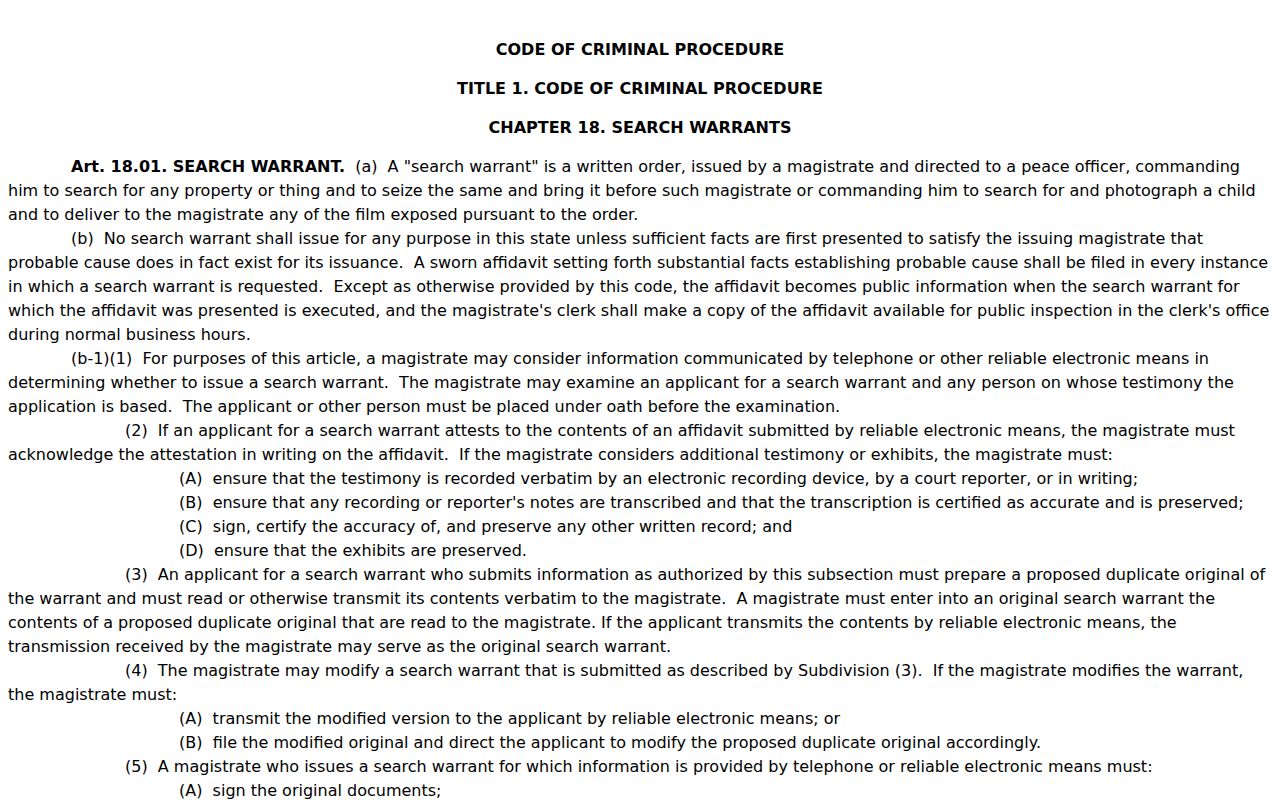
The image supports the legal distinction; it does not show a Comanche arrest-warrant record.
Arrest Warrants, Summonses, and Bench Warrants
Names matter here. A summons tells a Comanche County resident to show up in court, with no arrest attached. An arrest warrant is different. It allows peace officers to take the named person into custody once the legal showing is met. A bench warrant usually grows out of a missed obligation, like skipping a scheduled appearance, so ask the issuing authority which document sits in the file.
| Feature | Arrest Warrant | Summons | Bench Warrant |
|---|---|---|---|
| What It Orders | Custody of a named person | Appearance on a stated date | Enforcement after a court obligation |
| Basis | Judicial probable-cause finding | Notice directing an appearance | Missed appearance or other noncompliance |
| Who Issues It | Judge or magistrate | Authority permitted by procedure | Judge in the pending case |
| How to Respond | Confirm with counsel and issuing court | Follow the appearance instructions | Ask that court about recall or appearance |
Federal Warrants and Comanche County Cases
Federal warrants live outside the county and city court files. Comanche County sits in the Northern District of Texas, Fort Worth Division. That means a federal case runs on its own docket. Neither the county's Tyler access nor the County Clerk index will show it. The Northern District of Texas posts the court's information and access links. For case documents, PACER is the public route. It requires an account. It charges $0.10 per page, capped at $3. Sealed documents stay closed to public access. A Comanche County clerk cannot confirm a federal warrant. A PACER docket search is no substitute for contacting counsel or the issuing federal court. Federal matters belong to that court rather than the 220th District Court or a county clerk. The U.S. Marshals Service lays out the district's venues too; see the federal courthouse location listing for the Fort Worth route and the rest.
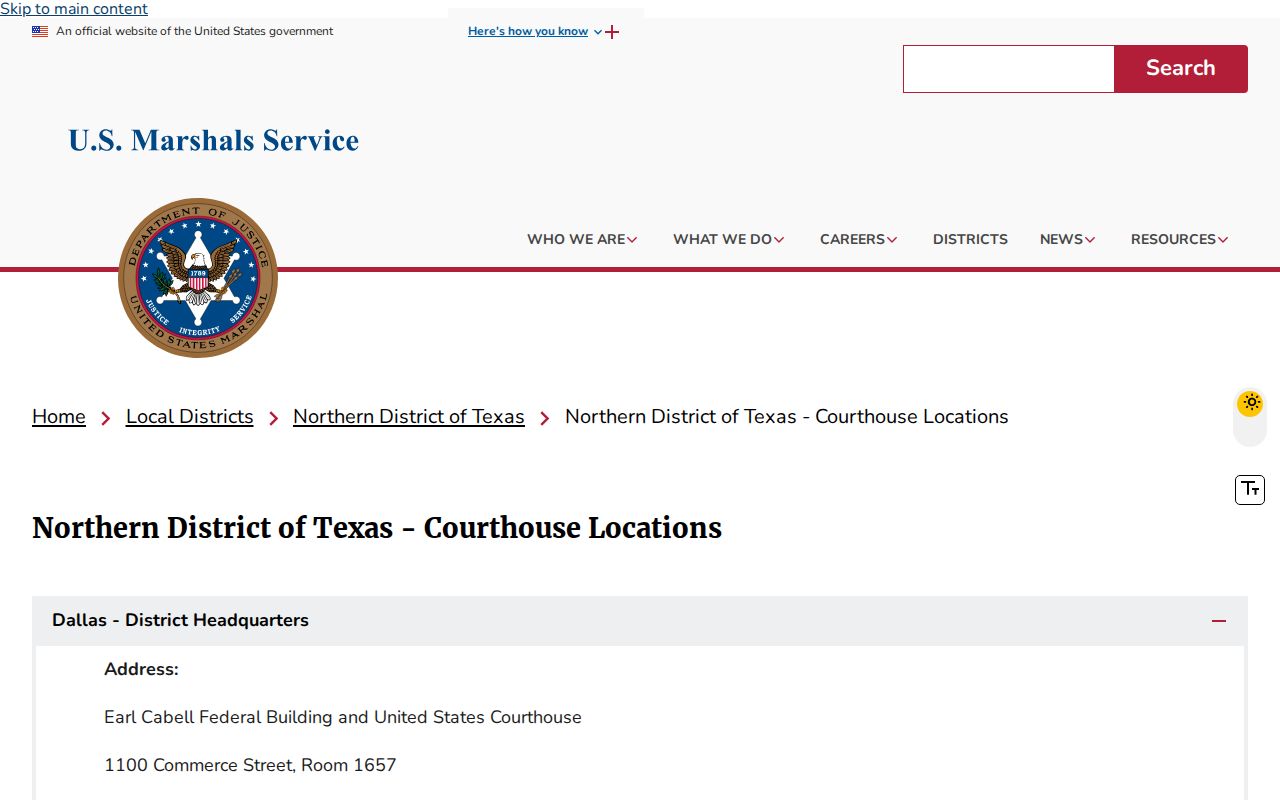
Venue details never confirm that a particular person holds a federal warrant in Comanche County. PACER's official public-access page explains its accounts and document charges.
Federal sealed documents are not available through an ordinary public PACER account.
Arrest Warrants and the County Jail Roster
The Comanche County Jail roster is a custody record, not a warrant list. It may list a booking date, charge description, bond details, and a court or hold. What it will not do is show every outstanding arrest warrant. Someone missing from the roster may still have one. A booking can also stem from more than one legal process. So call the jail about a person currently in custody. Call the issuing court about the warrant and case status. Each office holds different information, and neither page offers a real-time countywide warrant lookup.
Handling an Arrest Warrant in Your Name
Start with whatever paper names the issuing authority. That could be a notice, a cause number, or the court's own name. Ask that court directly whether the order is still in effect, whether a bond has been set, and what appearance procedure applies. A Texas attorney can talk through voluntary surrender, arranging bond, or a motion to recall or quash. One caution fits here. Paying a clerk or speaking with the jail does not change the court record. For general routing in Comanche County, the Sheriff's Office can point callers to the right agency. A district felony case belongs with the District Clerk, who identifies the case file and court staff. If the person is already in custody, the jail handles booking details while the court handles the case and its conditions. Before you appear, have counsel confirm whether the order is a warrant, a summons, or a capias, and whether bond applies. That one question shapes everything about a Comanche County appearance.
Important: Speak with a Texas criminal-defense lawyer about a safe appearance plan; an open arrest warrant can lead to custody during law-enforcement contact.